25 September 2011

Banned Book Week: Twilight

Twilight by Stephenie Meyer.

This is probably the only time you will really see this title on my blog. It just doesn't need more publicity, and even though I plan to slog through the last three books at some point, it's not necessary to give them any more attention than they've already received. I don't feel like they are particularly good books in content, underlying message, or writing style, though Meyer does create a somewhat compelling plot in between Bella's whining and pining.

Despite all of that, I would not want to see these books banned. I might not have wanted to see such a prestigious publishing house as Hachette subsidiary Little, Brown, and Company to have produced these seemingly slack-edited volumes, but I don't hate it enough to burn every single copy in existence. In fact, I wouldn't do that to any book, because there are always more reasons to preserve a book than to let it perish forever. I don't even think these books should be removed from most schools; granted, primary school (ages 6-13) might be a bit young, though 12 isn't too terrible to start these with parental discussion available. I do have a problem with the inability of children to bring and trade their own copies to school, as mentioned in the previous link. This is definitely an encroachment on free speech/freedom of information and parental governance.

The link also mentions a concern with children being unable to determine whether the works are fictitious and developing a "wrong grasp on reality." It seems to me that either the children in Australia have been living with too many poisonous animals and therefore have a warped sense of what monsters are real OR the adults in Australia think their children suffer from psychosis until they reach maturity. Even when I was five years old, I had a pretty good idea of what was real and what wasn't, and if I didn't I asked someone. Of course, Australia isn't alone in boneheaded moves, plenty of places in America have banned or challenged these works and while I personally don't care for what these books stand for, I do not have a problem with them being a form of entertainment.

No, the main reason I would want Twilight to be banned is that it has bred a slew of similar works simply because it has made money. I do not mind that Twilight has made money, or that other people would like to make money in a similar manner, but publishing houses are so focused on finding the next Twilight that I am sure they are ignoring other much more important YA books in favor of YA Paranormal Romance/Love triangle/whiny and personality-less heroine type books.

Sigh. But.

I have no say in what publishing companies decide to produce and so I can only go all ragey on the really bad stuff and/or express my disappointment. And so somewhere another publisher is putting another one of these travesties on the market instead of a really amazing YA book about growing up as a gay Mormon** -- a book sure to be banned across the country.

LibsNote: Book first read sometime in 2008 or so, hence the lack of ISBN for this post.
*Banned Graphic provided in part by Barefoot Liam Stock, with permission.
**To my knowledge, this book does not exist on the market. WHERE IS THIS BOOK?


Because I don't like it, dammit!
 And also dirty, dirty married vampire sexin's.

24 September 2011

Banned Book Week: The Hunger Games

The Hunger Games by Suzanne Collins. ISBN: 9780439023481.

So about a year ago, this book was challenged by a parent in New Hampshire (link under the Banned image). The complaint being that her daughter, in 7th grade at the time, was having nightmares and the children were being exploited, having to fight each other to the death and all for "entertainment" purposes. First of all, congratulations on having a child who isn't desensitized and therefore had a proper response to this novel via nightmares.  Second, while the Hunger Games may have devolved into a form of entertainment for people in the Capital, and a couple of other Sectors, for the most part it was a very political method of keeping an oppressed population in line.

And while I agree that the slaughter, or even exploitation of, children for entertainment is despicable, sweeping it under the rug will not prevent it from happening or negate its existence. All that will do is create an atmosphere, or at least a bubble, of ignorance of the issue. Which, even though I disagree with this approach, is the right of a parent. Parents do have the right to allow their child(ren) to live in ignorance of certain issues up until that child reaches the age of 18... although most children over 13 have figured out how to get into whatever the hell they want to get into anyway and so by that age your only option is to keep them locked in the basement. I think that by 7th grade, children should be aware that bad things happen to young people and could potentially happen to them. I recognize that those are not comforting thoughts for a child, and really uncomfortable thoughts for a parent, but unfortunately we don't live in a world that is safe for everyone. So, even if you live in the suburbs of New Hampshire and your daughter hasn't been exposed to child on child murder/brutality or exploitation of children by adults, it might be best that she is aware that it does in fact happen in the world.

There are several reasons for this: it will allow her to form an opinion about it; it will allow you, the parent, to inform the opinion that she forms about it; addressing the fears causing the nightmare will be much more effective than ignoring or preventing those fears; and perhaps she will become impassioned by the idea of ensuring that the children of the world, our world, aren't subjected to the same fate as fictional children in a land faraway and once upon a time.

Let's be realistic. Raising our children with limited exposure to violence is still a privilege. If it is something that concerns you, as a parent, so much that you don't want your children reading about it -- in a safe and secure situation, nonetheless -- perhaps you can do more to tackle the real life problem rather than addressing its fictional counterpart. Because really, the real violence and exploitation should be far more distressing to you as a moral being than the fact that someone wrote about characters in a book killing each other. Working on it with your child may even help with their nightmares... Just a thought.

LibsNote: Previous read, blog posts can be found here.
*Banned Graphic provided in part by Barefoot Liam Stock, with permission.


because children died for "entertainment" purposes.


22 September 2011

Post 428: The Maid

The Maid by Kimberly Cutter. ISBN: 9780547427522 (eGalley - publishes: October 20, 2011).

Although I didn't find this a particularly strong Joan of Arc novel, I do appreciate how difficult it must be to write a fictionalized account of someone you really respect, admire, or even worship. On the one hand, there is the desire to present an accurate account of events with factual information, etc., but sometimes in order to create a really compelling story those events have to be ignored. Sometimes you even have to present your hero in a less than favorable light in order to make him or her a well rounded character (or, you know, human).

I think Cutter really tried to do this with The Maid, but just didn't quite get there. There were a few too many eggshells she tried to step around instead of just stomping all over them to get where she wanted to go. I'm not sure I could have written anything better, mind you. If I had been given the task of writing a fictional account of the life of Martin Luther King, Jr. or some other generally well respected individual, I don't think I could do bring myself to do it. I would be more concerned with telling a compelling story than upholding the pure and glorious image of that individual. I would want to introduce the moments when they were fallible and human and being stupid or immoral or were otherwise not being Great People.

This is where people are more interesting, really. Maybe that's showing my appreciation for drama and other train wrecks, but it's also much easier to relate to someone who cheated on a history exam than someone whom the history books are written about. Basically, I probably would have crushed one too many eggshells and really pissed someone off either because they don't understand the idea of fictionalized accounts, or because I included factual information they didn't like. That shit happens too.

Who would you have the most trouble writing about?

My review can be found on Goodreads.
LibsNote: Review copy provided by NetGalley.

19 September 2011

Post 427: Steampunk!

Steampunk! An Anthology of Fantastically Rich and Strange Stories edited by Kelly Link and Gavin J. Grant. ISBN: 9780763648435 (eGalley - publishes: October 11, 2011).

One of the things I like most about steampunk, besides the inventive gadgets of course, is that no matter how disparate the social structure or power dynamic, the machines almost always seem to play a part in helping equalize it. All you have to do is be able to figure out the machines, or at least be clever enough to use them in a different way and find someone to help you do that.

Because of this, we seem to get pluckier characters, usually children, and often female children or young adults who get fed up with The Way Things Are and go about working around, with, or against the system to get what they want, and damn the consequences. Nearly all of the stories in this collection are about children, or at least start off that way, and the majority of the steampunk works I've read (Leviathan series, to some extent the Parasol Protectorate, many of the Pump Six stories, etc) have involved young characters in otherwise powerless positions. This was not the stated goal in this particular anthology, so I am especially interested in the fact that pretty much all of the stories contained this element.

For instance, the fabulous Cory Doctorow gives us The Clockwork Fagin, a sort of Oliver Twist with a twist; indeed, this is where the title comes from. Our narrator ends up in a workhouse for girls and boys who have lost limbs to machinery, not uncommon during the industrial era, but these are computing machines rather than industrial looms and presses. And instead of "Oliver" going to the "Artful Dodger" it's the other way around. In the end the kids find a way of gaining a great deal of freedom, and even a better life, than they would have otherwise. This is in part due to the knowledge they gained from the previously mentioned powerless positions as child laborers. Of course, these children still had to wait for a leader among them to assist in their liberation, but that they are able to rise above their circumstances is all due to the mechanisms in hand.

Other interesting stories include The Last Ride of the Glory Girls (Libby Bray), Steam Girl (Dylan Horrocks), and The Ghost of Cwmlech Manor (Delta Sherman). The first two involve outcasts finding their places, the first through her use of mechanical know-how and the second as two teenagers relate to each other through their imaginative stories. The last story is probably the least profound in the sense that Tacy does not avoid servitude, but still manages to eke out a better living and a better servant position.

Despite the similarities in steampunk, there is still a lot about it that is unique to the genre. People are more playful with it, and it is a vastly more hopeful realm of science fiction than some of its predecessors (i.e. Frankenstein stories). It revels in the technology and offers it up as a token of hope rather than the ever present dire and doom of more traditional science fiction. To be certain, there are still some authors who go dark and gloomy with this genre (hi there, Bacigalupi), which isn't a bad thing; rather it provides a more vivid contrast to every silver lining presented.

My review can be found on Goodreads.
LibsNote: Review copy provided by NetGalley

15 September 2011

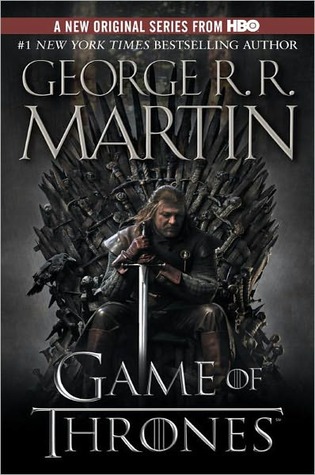
Post 426: A Game of Thrones

A Game of Thrones by George R.R. Martin. ISBN: 9780553897845 (eBook).

Spoiler...ish? Alert: I will be talking in vague terms about what happens to various characters, in the sense of, "unnamed bad things happened to Specific Character." Some people have weird ideas about what constitutes a spoiler, so just in case here's your damned alert.

The characters in this book are awesome and rat bastards and/or whiners. Which I have to admit is something that most novels, especially fantasy novels, seem to lack. The entire book is composed of grey area characterizations. There are characters we are pretty obviously supposed to like even though they are annoying, and characters we probably shouldn't like but do anyway, or at least we can understand their motivations and their behavior.

For instance, I like Jon Snow and Arya Stark. They are just about the same character, really. Not in a bad way; they are more like companion characters rather than exact duplicates, they share many of the same issues and by reading about one character we can easily learn more about the psyche of the other. Maybe this sounds like sloppy writing, but in a supposedly 7-book series in which each book is 800 pages (or more), having characters who have similar backgrounds and personalities, who are also related to each other is as much a blessing to the audience as it is to the author. And though they start the story from similar places (black sheep in an otherwise uptight vanilla family), they end up in completely different places. The same is true for their opposite siblings (Robb and Sansa), who are also paired in the sense that they are "perfect" children who adhere to their assigned roles. Sansa is ever the lady that Arya cannot possibly be, and Robb is lord of the manor and the legitimate son that Jon can't be, no matter how good of a son he is, since he is a bastard. Meanwhile Sansa ends up in a less than desirable state due to her obedience to social norms, mostly because she was not mindful about her obedience.

On the other hand we have Catelyn Stark and Eddard Stark, the parents of the Stark children, who also echo Sansa and Robb, but in the opposite manner. Eddard ends up in a not so great situation, whereas Catleyn fairs relatively well. Catelyn is your typical dutiful mother and wife, but she also understands what she has given up to be that. Meanwhile Eddard turns a blind eye to what his king and friend has become and makes poor decisions about who he trusts because he trusts who he feels he's supposed to trust based on duty.

Meanwhile we have the "villians" who, while villainous, also have some fairly understandable motives. Let's look at the biggest asshole of the bunch, Viserys. There are pretty much no redeeming qualities to Viserys: he is whiny, a bully, and has entitlement issues, but who among us wouldn't have a deep seething rage if our home, family, and promised future was taken from us? The fact that Viserys takes it out on his sister and has a laughable catchphrase only makes him a douchebag, which in some ways makes him even more pitiable. Because in the end we feel he deserves his fate, and that in itself is somewhat sad.

Even conniving bitch Queen Ceresi has understandable reasons for being a conniving bitch. Let's face it, how many of us would be happy in a marriage to someone who has a great deal of influence, has become fat, drunk, and frittered away most of his responsibilities, whores around, and still carries a torch for a woman who's been dead for 20 years? If I were stuck in that marriage, I might try to weasel my way into a better position and then off my husband too. Granted... my way wouldn't involve some of the dirty, dirty things Ceresi did, but Martin seems to have a thing for the whole brother/sister pairing. Which is fine, because there is totally precedent with the Ptolemys, but I have been raised with the social taboo and a brother I greatly dislike.

I could go on with the character analysis, but let's be honest, if you aren't interested in reading the book by now, you aren't going to continue to read this blog post. And if you are interested in reading the book, chances are you have already left this page so you can find a copy.

One of my favorite bloggers, Trish over at eclectic/eccentric has been tracking her thoughts through the book, she's only half way through, but here are her updates: one, two, three. A fairly good review is over at the wonderfully named Stainless Steel Droppings.
LibsNote: Library copy via Overdrive Media.

14 September 2011

Post 425: a general update

Hey there, readerlings. Banned Book Week is coming up September 24-October 1. Due to my poor planning, I already have review books scheduled for that week. This is not to say I won't be participating, because my Banned Book posts get traffic, and I do like me some blog traffic. However, I may not actually be reading new books, but rather reflecting on experiences from books I've read previously in my life and enjoyed. These are books I might not have been able to read if they had been banned that have had a positive, or at least enriching, effect on my life. If you don't like them apples, feel free to submit a guest post for that week on a banned book you've read. You can contact me at acampb8@kent.edu.

A Game of Thrones by George R.R. Martin.
Why yes, I finally got around to reading this book. I won't say I'm the last person to read this book, because I have read an awful lot of book reviews for books I just picked up that have that statement. Unless you plan to exterminate everyone who has an interest in reading, chances are you will not be the last person to read a book.

Steampunk! An Anthology of Fantastically Rich and Strange Stories edited by Kelly Link and Gavin J. Grant.
Hurr, hurr, I like steampunk. I'm blogging when I don't really feel like blogging, can you tell? Also, there is a lot of jibber jabber in the background that is very distracting, my headphones can only block out so much yelled phone conversation. Anyway, I'm about a third through the stories. They are not quite as fantastic as Pump Six and Other Stories, but most are still worth reading. This is another of those Netgalley grabs.

The Maid: A Novel of Joan of Arc by Kimberly Cutter.
I have always had a bit of a fascination with Joan of Arc, and female saints in general really. I wrote a whole paper about how some women used eating disorders as a means of attaining sainthood, or at least an elevated position in the community, when they might otherwise have been condemned to a life of childbirth and housekeeping. My history professor made me rewrite it because she didn't believe in feminism, and then complained that I had basically written a completely different paper... yeah. Nobody liked you, history professor who shall not be named. Martyrs are fascinating, well, the not self-proclaimed variety.

Shame the Devil by Debra Brenegan.
Brenegan's publicity person contacted me to review this. I am generally a nice person and agree to review things I have a modicum of interest in. I like to pretend it is good for me, that it will somehow expand my horizons or introduce me to topics/authors I might otherwise ignore. This is a novelization about the life of Fanny Fern, a feminist journalist in the 19th century. It is not totally out of my area of interest as a historian, so I can throw this into professional-ish development and call it a day's work.

12 September 2011

Post 424: Snuff

Snuff by Terry Pratchett. ISBN: 9780062011848 (eGalley - publishes October 11, 2011).

Oh Young Sam, how adorable you are. You and your fascination with poop. I have to admit, it is pretty interesting, especially when you consider all the different varieties and whatnot. And that Lady Sybil and Sam Vimes encourage your interest, well, aren't you a lucky boy?

Perhaps this is a strange thing to focus on in this novel, but I like to highlight positive parenting practices where I see them. I refrain from saying good, because even good parenting practices practiced too pressingly can go practically perverse. Also, I am not a parent, so using labels like "good" is possibly not my domain. However, I am observant, and like everyone else I have opinions about parenting, or at the very least mentoring.

Many parents would probably be mortified with a child's fascination with feces. Think of all the potential for impolite dinner conversation; you could never again invite people without small children into your home, unless perhaps they also had some sort of interest in intestinal ingredients, present and past. Nothing says fancy dinner like, "Mommy! Look at this poo I found! It's GREEN!"

Yet, having children this excited about any aspect of learning is certainly a good thing and should be treated as such. There is no reason to discourage this interest, which can be explored through various means of science: biology, chemistry, anatomy; even a discussion of practical uses of manure leads to many different fields, the most obvious agricultural. And the disease, oh BOY! What kid doesn't love to hear about all the strange and filthy things that might actually come from poop?

The point is, there is no such thing as useless knowledge, only knowledge that has yet to be used.* You cannot possibly predict circumstances where you might need to know the difference between bear poop and moose poop, but once you find yourself in the situation, it is certainly nice to have it. Therefore, there is no good reason to deny a child information from seemingly impolite, yet harmless, topics just because we are old crotchety adults and are only concerned with poop if we have to clean it up, or have not had one in awhile. By denying a child this one area of interest, we might be detrimentally directing them towards other pursuits they are not actually suited for. This immediately affects their interest in learning, as they are not given free reign over what they choose to learn. This of course takes the excitement out of learning, and turns it instead into a requirement.

Is it really any surprise that young people don't read as much anymore, or take pride in their studies? We have presented it as a task that has to be completed, a level to grind simply to get to the next one. But what use is it to accumulate equipment and skills that will never be used? And why force everyone to train like a cleric when what they really want is to be a bard or a sorcerer?

Obviously, we are not in a society that allows this in the classroom. Test scores are touted as the best measure of success, and so our children are learning to take tests. What fun. But I applaud the fictional parenting of Vimes and Lady Sybil and hope that there are other parents out there who encourage the educational pursuits of their children, regardless of what tack they may take. Who knows, it could even lead to discussions on etiquette and what is and is not an appropriate dinner topic.

My review can be found on Goodreads, however it's brief given that people who like Pratchett like Pratchett and those who don't can sod off.**
LibsNote: Review copy provided by Netgalley.
*I tried to find the source of this phrase, but it appears to be a common usage. Perhaps a librarian with better resources than myself knows the answer?
**Not really, I understand it's not everyone's thing, I just always wanted to use the expression.
EditorsNote: DAT ALLITERATION.
Also, you don't have to ask me what I liked about this post. You already know the answer. (Hint: it's the poop.)

08 September 2011

Post 423: Dracula in Love

Dracula in Love by Karen Essex. ISBN: 9780767931229.

One of the things I kept thinking while I was reading this was, "Gee, did I accidentally pick up some smut?" Which is interesting, because really the sex is no more graphic than what men write. Sure, some of the scenes were described a little more flowery than the usual "bouncing breasts" and "thrusting grunts" that you usually get in the consensual male-written scenes, and well, let's not discuss non-consensual scenes.

Granted, I knew there was going to be sex in this book. I knew this because there was sex in Dracula, however hidden behind Victorian sensibilities and petticoats. What I was not expecting was the detail Mina Harker went into, perhaps because I was expecting her, as a Victorian woman, to be a little more discrete about her sexual encounters. Also I did not expect it of Essex. And why? Because I still have expectations that "real" women authors do not write graphic sex scenes, no matter how necessary they are to the plot. I expect "real" women authors to tastefully fade to black and talk more about the anticipation of desire and the act, rather than the satisfying and fulfillment of those desires.

Which, of course, is stupid.

Men are easily able to satisfy their baser literary desires, splattering their virile ink all over creamy white virgin pages,+ but women writers who so much as broach the subject of adult sex are relegated to the very large and profitable genre, which is subsequently looked down upon by all those uppity types. Not unlike prostitution really. Or being a housewife. Rarely do we see women writers writing about sex, in a non-academic manner, who are lauded. There are exceptions to the rule; yet, why haven't there been any males shoved into the romance, or at least erotic fiction, genre when they write novels loosely pieced together with sex scenes?

Really, this is a problem. And while I have read Sugar in My Bowl, I don't feel like it quite went far enough. The majority of those women at least appeared to come from fairly educated white middle class backgrounds, with a few token exceptions, and many were straight or at least only wrote about straight experiences. If men are supposedly making leaps and bounds in the realm of writing about sex--which I don't think they really are; I mean come on, how many times can you write about primal urges (The Last Werewolf, Jeckyll and Hyde, Dracula, The Evolution of Bruno Littlemore, okay, that last one is about an ape, but it's about an ape that wants to be a man)--then there is no reason for women to stay behind and take care of the kids by writing about the niceties of tea time and how much they love their husbands.

I am tired of those novels. They have their place, but it is also important that women write a true reflection of their lives rather than idealized versions. Life is full of dirty messy sex, shameful sex, gloriously rambunctious sex, lovers who have no fucking clue whatsoever, and husbands with inadequately sized penises who have stopped satisfying simply by not even bothering to try anymore. Seems to me like men have a lot to gain by reading female writers. If only we were writing something that was based a bit more in a reality they could understand and learn from.* The fantasy world is nice and all, but that's just a distraction; the world needs to know that as far as things have come, we have still been given a substandard deal, and holy shit, there are things men can do (if they love us as much as they say they do) to make it suck less.

I will write about fucking in a poignant and life changing manner. I might even let you pay me to do it. But you bastards have to read it.

My review can be found on Goodreads. Devourer of Books has an excellent review.
LibsNote: Copy received from the Goodreads FirstReads program.
*Although, the fact that they seem incapable of learning from a world they can't ore refuse to understand is definitely more their problem than ours
EditorNote: +DAT METAPHOR!

05 September 2011

Post 422: Bedbugs

Bedbugs by Ben H. Winters. ISBN: 9781594745232 (advanced copy - publishes: September 6, 2011).

Much like Amityville Horror and Rosemary's Baby, this book focuses on a family moving, although since the Wendts are New Yorkers they are moving into a new apartment. Yet, those are not the only two examples in the horror genre that involve relocating. Even when relocation is not an issue, you sometimes get stories like Poltergeist in which the house becomes a sinister place where strange phenomena occur.

It is no real surprise that this is a common theme, really. What is more terrifying than knowing the place you have set up for yourself as the safest place for you, is just the opposite? What's more, having a malevolent and unexplainable force makes it more difficult to address the problem rationally. We all become Susan Wendts under this condition, prone to irrationality and emotional outbursts, sleeplessness, constant worry, and second guessing whether the move/dramatic change was a good thing or not.

That we move into homes usually occupied and/or built by other people adds an extra layer of complication over the concern and worry of moving into a new home. Moving, especially to bigger and better quarters, is supposed to be a joyous occasion, but there is something difficult about leaving the old place behind as well. We leave the familiar, a place which we know has problems: it is too small, the basement floods, the neighbors are dickwards. But there are countless unknown problems with moving into a new place; wouldn't it just figure you got stuck with demonic bedbugs or neighboring Satanists who get you knocked up by the devil?

Although most of the fears that go along with moving are generally unfounded, and we adapt quickly enough to our surroundings, it makes sense for it to hold sway over us nonetheless. Seeking shelter is one of our primary needs, second only to food and water. In a world where we have very little control over our circumstances, the idea of having the one corner of it we set up where we are supposed to have control, but don't is distressing and therefore hits us at a very primal level. Having lived in a place where I felt unsafe, I can assure you that it is one of the worst possible situations to be in. I imagine this is why the haunted house is such a common theme in horror stories.

My review can be found on Goodreads.
LibsNote: Review copy provided by publisher.

01 September 2011

Post 421: Amy M. Donaldson (Interview)

Amy M. Donaldson works as an Associate Editor at Baker Publishing Group. She received her PhD in New Testament and Early Christianity from the University of Notre Dame. Her recent book, We Want to Believe, was published in April 2011.

LibsNote: The interview took place via email with the author, who was contacted via Goodreads. The interview mostly remains unedited, except for the removal of certain clarifying elements or rewording of questions posed that I later realized sounded awkward as hell. All hyperlinks added by LibsLIB and not necessarily endorsed by the interviewee.


LibsLIB: Did you have any concerns writing a book about a show that's been off the air since 2002?
Amy M. Donaldson: I wasn't concerned that there wouldn't be an audience for the book, since I've remained active in the fandom and know there are still plenty of X-Philes out there. However, until the second movie came out, I wasn't sure that there would be enough interest in the show to sell the idea to a publisher. So, although I had gathered ideas for the book over the years, I didn't give any serious thought to actually writing it until there was news of the second movie. And I didn't start writing the book until I had secured a publisher.

LibsLIB: Why did you feel compelled to write about the religious themes in the X-Files?
AMD: I was interested in writing on the topic because it was always one of the things I enjoyed about the show and because it hadn't really been written on before. There's a book on the philosophy of The X-Files and at least two on the science of The X-Files, but as far as I'm aware, all that's been written about religion in the show are a couple of articles. It seemed to me like a very rich topic worth exploring.

LibsLIB: Why this show? What does the X-Files provide for you that keeps you coming back to it?
AMD: As much as I appreciate the religious themes, for me the heart and soul of the show is the relationship between Mulder and Scully. That's one reason why in my book the chapter on love is one of the longest chapters. But the emphasis on religion, and especially the role it plays in Scully's life, has always intrigued me and earned my respect. Most other shows I've seen that try to address religion have missed the mark in one way or another. But The X-Files treats religion and faith as a normal part of life for intelligent people and presents the possibility that supernatural events are genuine and may be attributed to the divine.

LibsLIB: You mentioned the general lack of religion(s) in science fiction, do you think this is an oversight on the part of sci-fi authors? 
AMD: Sci-fi as a whole (including books and movies, not just television) does not necessarily shy away from religious themes, but sci-fi religion is often more metaphorical or negative rather than a depiction of real-world religion in a true and positive light. That's where I see a distinction in how religion is treated in The X-Files.

I think where there is a lack of religion, or even hostility to religion, in sci-fi, it often says more about the authors/creators themselves than about the worlds and people they create. I also think that the lack of human religion I note in Star Trek: The Next Generation and Stargate SG-1 is a trend that has shifted since those shows first aired. Perhaps in that way The X-Files was simply cutting edge or trendsetting. As sci-fi has become more postmodern, there seems to be more allowance for religion and faith. But that religion itself also tends to be more postmodern, such as the syncretistic mix you find in Lost, or focused on the fact of faith (a general sense of spirituality) rather than the object of faith. The X-Files still remains somewhat unique in giving such a prominent position to a mainline tradition like Scully's Catholic faith.

LibsLIB: Have you read any other books or seen any other shows that you enjoyed that also had religious and sci-fi elements? 
AMD: My latest sci-fi interest has been Stargate Universe, which unfortunately just got canceled after only two seasons. There were a number of religious themes introduced in that show, and I was interested to see where the writers were taking these themes, especially since it seemed like such a far cry from how religion was treated in Stargate SG-1.

LibsLIB: If you've read it, what are your thoughts on Mary Doria Russell's The Sparrow?
AMD: I have not read this book, but I googled it, since you mentioned it. For some reason, sci-fi books don't appeal to me as much as sci-fi television and movies. My father is actually the avid sci-fi reader in my family.

Libs LIB: In your book you state, "The counterpart to justice is mercy: not repaying someone the full punishment they deserve. At times, mercy can be just as effective a deterrent as consequences, when the person realizes the price they should have paid and out of gratefulness vows never to repeat the offense."

I immediately thought of Jean Valjean in Les Miserables both as a recipient of mercy from the priest and its giver by sparing Javert's life. Why do you think this is a recurring theme in literature/storytelling? Can you think of an example of this occurring in the X-Files?

AMD: I love that aspect of Les Miserables and think it is such a powerful story. (I may even have had it in mind when I wrote that sentence you quote!) Honestly, one reason this may be a recurring theme is because it is such a major theme in Christianity and because Christianity has had a major impact on Western literature. However, it is also a powerful theme because it is so contrary to human nature. The very shock of being treated with mercy when you expect judgment can be very compelling—if, like Valjean rather than Javert, you can accept the gift of that mercy and allow it to change you.

I think I can see small examples of this theme in The X-Files, but not anything as major and profound as in Les Miserables. One example is in the "Gethsemane"-"Redux" arc, when Mulder kills a man (out of self-defense, although he never seems to argue that point) and fears he is headed for jail, but he is spared prosecution. However, that is more a plot device to save our hero after he has been placed in jeopardy for the sake of a season-ending cliffhanger than it is a message about mercy. Perhaps a more intentional example is the soul eater in "The Gift," who mercifully takes on himself the "death sentence" of others. But the truest act of mercy is by those like Mulder and Doggett who recognize the suffering and humanity of the soul eater and refuse to prolong its pain.

LibsLIB: In your interview at The X-Files Lexicon, you stated that you don't believe in aliens. What compelled you to keep watching the show, especially for alien-centered episodes? Are there any paranormal/supernatural phenomena you are inclined to believe in?
AMD: Although The X-Files has a reputation for being about aliens, there were really so many episodes that had nothing at all to do with aliens. And even the episodes that did had more to do with the human element in collaboration with the aliens. I also don't believe in Gene Roddenberry's vision of the future, but that never stopped me from enjoying Star Trek. What keeps me watching anything is good characters and a good story.

I believe in the supernatural more than in the paranormal. Because my worldview is to see reality as the creation of an invisible and all-powerful God, I also believe that he is capable of doing any number of things that we as finite beings cannot fully perceive or understand. The scientific, and often modernist, mindset of Western culture can sometimes blind us from seeing beyond the tangible, but I think there is more to reality than what we can perceive with our limited five senses.

LibsLIB: Who is your favorite character and why?
AMD: I identify more with Scully, but I'm not a "Scullyist" in the sense of some fans who prefer her over Mulder. I think the last two seasons of the show prove what a bad idea it is for one of the pair to be without the other. I generally don't enjoy as much the episodes where one of the two is absent (except maybe for "Three of a Kind," just because the Lone Gunmen are so much fun).

I love the fact that Scully is such a strong female character who is intelligent without being overly weepy or sexualized. I also love the fact that Mulder has so much respect for her, from day one. I think my main appreciation for Mulder is through Scully's eyes.

LibsLIB: What is your favorite way to enjoy an episode (or three) of the X-Files?
AMD: I suppose my answer may have been different back in the day, when the episodes first aired. Now, I simply enjoy having the show on in the background while I'm doing other things. But I was never one to have a specific routine, such as turning off the lights and silencing the telephone. In the first season that I watched the show, my roommate and I would record the show and then watch it together later that night when we were both home. Later on, though, I couldn't wait that long—I had to watch the show while it was airing.

LibsLIB: The X-Files is famous for "Mulder torture" both in the fandom and the show. Do you have a favorite form of Mulder torture?
AMD: I'm not particularly fond of torturing Mulder, nor can I say that I fully understand why some of my friends enjoy that so much. I guess the closest I can come to having a favorite moment is in "Anasazi" when Scully shoots Mulder, for his own good. What's a little bullet wound between friends?

Related Posts Plugin for WordPress, Blogger...