04 February 2011

Post 314: Bottled and Sold

Bottled and Sold: The Story Behind Our Obsession with Bottled Water by Peter H. Gleick. ISBN: 9781597265287.

You know what, I'm not a big fan of advertising. I don't find the majority of it useful in selecting what company I'm going to buy something from. Many of the products that get advertised the most heavily are practically indistinguishable from each other and so the only real difference comes out to a preference in price and packaging. Because of this, II consistently buy off brand soda, toilet paper, ready made foods like macaroni and cheese, and other products because it means I'm not paying that extra thirty cents to have an annoying ad campaign run on my tv, pop up on my computer, or distract me while I'm driving.

The idea of having to advertise water is especially ridiculous to me. Given our biological need to drink a certain amount of water a day to feel well, why does anyone feel the need to push it on us? Certainly there are many options of what kind of water to drink, whether it's tap water, Poland Spring, Dasani, or some health nut eco-friendly brand, but if I need to drink water I'm probably going to go with the most easily accessible and cheapest option. I need at least 64 ounces of water a day to sustain my bodily functions. Given that water comes in anywhere from 16.9 ounce to 24 ounce bottles, even at the larger 24 ounces I'd still have to buy three bottles to get my daily recommendation. Since I can't find pricing information for the 24 oz, I'm going to go out and take a look at the vending machine at my apartment. Be right back.

Okay, now I need a cup of tea because my fingers are too cold to type. The things I do for you, readers.

So, my apartment complex has a Coke vending machine that sells 12 oz cans of Coca Cola (2), Diet Coke, Cherry Coke, Mello Yellow, Sprite, and 10.1 oz bottles of Dasani Water (2). Everything costs $0.75. However, let's pretend that my water has been shut off, for whatever reason. I would have to pay $5.25 in order to meet my daily requirement for drinking water. Sure, I could go to Walmart or Meijer and buy the 24 pack of 20 oz bottles for about the same price, but multiply that by the average number of days in a month, and now I'm spending $157.50 on water.

Somehow I doubt that the majority of that money would actually go to the production or testing of the water. I'm less interested in drinking bottled water and more interested in having greater access to safe, clean tap water. If bottled water is cleaner and safer, then the answer is not to buy bottled water, but to be pissed off that we're paying taxes and utilities for something that is not being delivered. You know what would be a great way to get revenue to rework and improve water facilities? Taxing bottled water. Problem solved, I'm awesome.

My review can be found on Goodreads.
LibsNote: Free digital review copy provided by NetGalley.

03 February 2011

Post 313: First Contact

First Contact, or, It's Later than You Think by Evan Mandery. ISBN: 9780061966187 (eBook).

What would you do if you were the president and the Ambassador of an alien alliance came to earth and said, 'We have come to enslave your planet and turn it into a dry cleaners. Please have our pants done by Friday'? I don't know about you, but once I knew for sure it was a joke I would probably laugh my ass off, if only in relief. And really, it's a pretty funny joke. Maybe not the kind of joke you would usually tell when meeting a species for the first time, but it's no worse of a snafu than throwing up in a tuba during a state dinner.

In First Contact, the president didn't handle the joke as well as he could have. Mostly, he took offense to it. Perhaps humor is the wrong way to approach any alien species (regardless of who is on the receiving end). Humor is one of those things that requires a great deal of knowledge about a particular culture in order for it to be really successful. One needs to know several things, such as recent and not so recent politics, popular culture, awareness of any sort of political correctness issues, and the intricacies of the native language, for a joke to go off well.

For instance, I personally find dead baby jokes hilarious, but they make some people extremely nervous. You may still get a laugh out of someone with the dead baby joke, but it may not be the good kind of laughter. This is probably why dead baby jokes are not so popular anymore; there are an awful lot of people who get offended about theoretical babies being theoretically put in a blender and then theoretically eaten as chips and dip. The reason I find it hilarious is because it is such a cultural taboo to do such a thing to a baby that the absurdity of imaging someone do this makes me laugh at the very wickedness of it. Other people do not have my sense of humor, which is why I don't tell that kind of joke in certain crowds.

But can you imagine an alien species coming to Earth and telling a dead baby joke? That would likely offend even me, mostly because I wouldn't be sure if that was actually acceptable behavior on their planet or not. This makes me appreciate native humor all the more. While people native to the culture may have an advantage, they still have to balance all the levels of acceptability with what is funny and what isn't. It might be why I find the Daily Show funnier than something like South Park, although they are similar in the sense that the both present social commentary on current politics and pop culture through humor. I personally find the Daily Show funnier because I think they actually try to preserve a balance between offensiveness and good natured ribbing, whereas I don't see that kind of care with the South Park humor. They're both good shows in their own way, it's just that one does a better job of knowing who to tell dead baby jokes to.

My review can be found on Goodreads.
LibsNote: eBook downloaded from my local public library.

02 February 2011

Post 312: First Contact

First Contact, or, It's Later than You Think by Evan Mandery. ISBN: 9780061966187 (eBook).

One of my favorite things about this book is the courtship between Jessica Love and Ralph Bailey. They are absolutely adorable in an adult-awkward young love sort of way. At one point they are sitting in the middle of the oval office (Ralph is a White House aide) having an indoor Chinese food picnic. They get on the subject of what they would do if they were President, and Jessica's answer involves giving every child a stuffed animal because it would teach them empathy. Then Ralph asks her what kind of stuffed animal she had as a kid.

I think this is my favorite question every to ask someone you're dating. What's more, I actually think highly of people who still sleep with stuffed animals and would find it quite endearing if I found out my date did so. Much of this stems from my love of stuffed animals in general, particularly unusual ones. My first stuffed animal was a mouse about the size of a standard teddy bear. I'm not sure what color it was originally, but the last time I saw it, it was a washed out dirty-ish tan color. Later I moved on to Raggedy Ann dolls, a variety of stuffed cats, and a platypus; I currently sleep with a stuffed mammoth.

I am not reliant on sleeping with stuffed animals and I treat them more or less as neck pillows or cushions, to help position my limbs more conveniently, but I do find something comforting about holding something while I sleep. I imagine it also says quite a lot about a person based on what kind of stuffed animal(s) they choose to have around them and how close they keep them.

The reason I currently have a stuffed mammoth is because it was given to me by my college roommate's parents. When he passed away they decided to give away some of his possessions to his close friends. So that year for Christmas I received a package from them with the mammoth and two small dinosaurs. Matthew and I had bonded previously over our stuffed animals, so this was probably the best thing they could have given me. During college Matthew slept with a stuffed squid and I had my aforementioned platypus. There were times when we tossed the stuffed animals back and forth or threw them at each other when one of us made a particularly bad joke or pun. I'm not sure what all this says about me, or anyone else who keeps them around, but personally I can't help but attach mostly positive experiences to people I've met who still keep them around.

My review can be found on Goodreads.
LibsNote: eBook downloaded from my local public library.

01 February 2011

Post 311: a general update

Well, looks like it's time to tell you what I'm reading again. I have two eBooks on reserve at the library that I'm next in line for. I have no idea when they will expire for the previous person or if said person will return them. Yes, you can return eBooks now, please do so after you have loaded them on your reader so the next person can download it. You still get to keep it on your reader. This is actually pretty cool. It's like returning a book without returning a book... Yeah.

Reading list time.

First Contact, or It's Later than You Think by Evan Mandery.
Oooooh, this book is so cuuuuute. There's a lot of funny going on in here. The characterization of the president is pretty hilarious, especially his response to aliens that appear Jewish, but really the courtship between Jessica and Ralph is the star of the show. Their conversations are adorable, but in a mid-twenties almost mature sort of way. I'm about 70 pages into this 250-something book and I'm already loving the wackiness.

Bottled and Sold: The Story Behind Our Obsession with Bottled Water by Peter H. Gleick.
I really hate the idea of bottled water. It seems like such a waste of money. Really the only time water should be bought in bottles is for storm preparation, camping trips, or other similar places in which clean tap water is not available. I don't even like the taste of most bottled waters, it tastes too flat and plastic-y. It can't possibly be healthy for you. Surely after awhile the plastic starts to break down and filter into the water.... Anyway, we'll see what Gleick has to say about it.

The Water is Wide by Pat Conroy.
I will admit, I read Prince of Tides sometime in high school and really liked it. I saw this show up on NetGalley and thought, "eh, why not." We'll see if I still like Conroy or if my liking of his work carries over to other novels. This one is about a failing school system in which most of the kids can barely read or write. Sounds familiar.

Republocrat by Carl R. Trueman.
Commentary by a Christian theologian and historian about why conservative Christianity does not and should not mean that one is also politically conservative and vice versa. When I requested the title I don't think I realize this centered around religion, but I'll be interested to hear Trueman's arguments as it seems from Goodreads reviews that he frames a very reasonable case.

Two Moon Princess by Carmen Ferreiro-Esteban.
Uh, this is another ALA 2010 pick up. I think I had heard good things about this on the book blogger circuit. I don't know why it's taken so long for me to get around to it. I like the idea of a princess wanting to be a knight. I don't think I'll get my hopes up though. Except for a very few authors, most YA literature marketed to girls I've read recently has been very disappointing.

31 January 2011

Post 310: Scars

Scars by Cheryl Rainfield. ISBN: 9781934813324.

There is a really great moment between Kendra and her therapist Carolyn when Kendra asks Carolyn why she didn't tell her she was a rape survivor. It's a good question for several reasons and a bad one for several others. The reason that Carolyn gives for not telling Kendra is that it was not a professional thing to do to give Kendra that information. This is correct on several levels. For one, it might impair Kendra's ability to focus on her own issues and how to move past them. However, Kendra brought up a good point that it might have helped her move past her own pain to know that someone she knew was a survivor of rape and was now a healthy and happy person. I'm going to tell you about some of my own experiences with survivor stories and how they have affected me.

I don't recall if it was every semester, or only every fall semester, but Antioch College regularly held Take Back the Night events. These ranged from the poignant and touching to the vaguely annoying for those of us trying to study (some events included going around at night through the dorms making lots of noise and chanting). One year I decided I would participate in any way I could. There was going to be an open mic night for people to tell their stories and several people I knew would be speaking. I wanted to go to support them. Little did I know that there would be so many people I knew, all with terrible, terrible stories. These were strong women and men, all of whom I admired greatly and who contributed to the community.

Their voices made me want to tell my own story. At first I didn't know how to start, in some ways I felt that my experience wasn't really a rape, but that is something that I think many people feel, especially those who are raped by people they know (that's most of them). Speaking out and telling people my story was one of the most terrifying things I've ever done. It hurt. It hurt more than the realization that this person who said he loved me never did and was manipulating me into doing things he knew I didn't want to do because I was young and inexperienced and would do it if he asked enough. And when I was done I felt better. I felt relief when no one came up to me and said, "that's not rape." In some ways it was a validation of my experiences, and that what happened to me was wrong even if I was not physically forced to do it.

When everyone was done speaking we were supposed to go on that Take Back the Night walk. I can't remember if I joined or not. I think I was still a bit in shock from the catharsis of telling my own story and the frustration of knowing that so many people I knew had been hurt in similar ways. The good news is that most of the people who spoke were happy individuals for the most part. It is hard not to let an event like that affect the rest of your life, but these people made their lives about more than their traumatic experience.

I don't think it is necessary for every rape survivor to tell their story in public. There is still stigma attached to the victim, which is sad and depressing. But if you are ready, and you want to tell your story so that people know that it can happen to anyone, there are places where you can tell it anonymously. And I would encourage everyone to remember that chances are they know someone who has been raped and to be open to receive that story if said person decides to tell you.

Great review from another reading Amy over at Amy Reads.
LibsNote: Received free copy from Sisters in Crime booth at ALA 2010.
If you're wondering why I didn't cover the obvious topics, it's because I've already posted about my personal experiences with cutting and (in my case, statutory,) rape.
Oh, um, if you saw a post for First Contact pop up in your reader yesterday, sorry about that, I hit publish too soon. The edited version will be on the blog in a couple of days.

30 January 2011

Post 309: One More Theory About Happiness

One More Theory About Happiness by Paul Guest. ISBN: 9780061685170.

I actually liked Guest's descriptions of finding poetry a lot better than his narrative about his disability. Call me strange, but I think he might actually have cleaner emotions and less conflict with that because he was able to write about it with a bit more clarity. Then again, maybe it's because I was able to identify with it a little better, having once considered myself a poet, but never having been paralyzed.

I especially liked the description Guest included when he "discovered" the poem Melancholia. He was reading the dictionary entry, which included the etymology, and initially read it as "black hole" when it was really "black bile." Although I don't write as much poetry as I used to, whenever I do pick up a pen it is usually under similar circumstances. I actually used to write two or three poems a day in high school because I was terribly bored with the lesson plans, which were often just a rehash of the textbook anyway. I kept a running list of titles in the back of my poetry notebook so that if I ever got stuck I could just flip to the back and use it as a kind of prompt.

My favorite poems though were the ones where lines and images seemed to come to me out of nowhere. Possibly one of my favorite poems that I wrote was for my undergraduate poetry class. Although it was for an assignment, I was going through a difficult break up at the time and I felt very detached and out of place. The relationship had been floundering for a while, but the end of it still hurt in a way I couldn't have imagined. So when the assignment came to write a poem using only imagery I had a flash of inspiration. I would write about the decline of my relationship and the oddness I felt associated with that. This is the poem I wrote:
"Let's Just Take a Break"
A flood gate opens.
Gallons of water
rush through a desert
that has its own forms of life.
Life that cannot possibly handle
this much water
emptying into
Caverns, Cliffs, and Gullies.
The land can’t absorb it all
fast enough.
So I am swept away
like an old canoe
the flood brought with it,
now sticking in the fork
of a blooming cactus.
There is no one to rescue
this vessel.
The canoe stays
Stuck.
Spines grow into
water-softened wood.
The flood recedes,
leaving a trail of green behind it,
and a canoe up in a cactus.

It is not an especially good poem, but I have always liked it for its simplicity. I like it because I did manage to capture the swell and overwhelming of emotions, the flood that I was feeling. And I did feel like my life was adrift. I didn't know what to do with myself half the time. I went through my day hoping it would be better than the last day, that I would cry less and hurt less and suddenly remember what it felt like to be happy.

I don't write poetry much anymore, partially because this blog has taken it's place, but also because I associate it with a very specific time in my life. I'm not really that person anymore, so I feel I need to use a new format to express myself.

Do you have a favorite poem or story that you've written? One that felt like it just came to you? Tell me about it.

A decent review can be found over at the Bookslut blog. I gave it two stars and a waffle (on Goodreads two stars is "it's okay".)
LibsNote: Free copy received from the publisher's booth at ALA 2010.

29 January 2011

Post 308: One More Theory About Happiness

One More Theory About Happiness by Paul Guest. ISBN: 9780061685170.

So...I never learned to ride a bike. Oh, I had one, but I never got past the training wheels stage. Part of this may have been my fear of falling. I have always been cautious about my footing and balance when hiking or even just walking down the street. I often hesitate before taking my first step, and sometimes this has actually caused more falls than it has prevented. This fear likely occurred because my awkward stage started earlier than most of my peers and lasted up until I was about twelve (when I stopped having huge growth spurts).

In any case, this did not bode well for me learning to ride a bike to begin with. The second factor was that my parents bought me a bike I would "grow into". It was not quite an adult bike, but it was definitely built for someone taller than my five-nearly-six-year old frame would allow. Sure, I was tall for my age, but the pedals were an awful long way away, and the ground was even further off. By the time I had grown into the bike I had already given up ever learning how to ride, mostly because I fell often, and when I fell someone was usually around to laugh at me... and it was usually my father.

In some ways I regret never having learned. On the other hand, I've surely avoided some pretty severe accident just by not putting myself on two precariously balanced wheels. While I may not have had an accident like Guest's that would have left me a quadriplegic, I may still have broken or fractured bones (I already had enough of those just walking...awkward phase was REALLY awkward), or even been hit by a car like my mother was.

I do think it's something I'd like to learn, but I'm not sure I'm really in a hurry. I've gotten through life pretty well without knowing how to ride a bike so far. Besides, America isn't really built for biking anyway. Maybe when gas goes up to $5/gallon and we start seeing more bikes on the road I'll be more inclined. People are just too careless, encased in their ton or so of car, for me to ever feel safe on something so fragile and spindly. I do sometimes wonder if I missed out on some social opportunities as a kid because I couldn't ride a bike. Then again, I don't recall ever being asked to go for a bike ride with anyone...

A decent review can be found over at the Bookslut blog. I gave it two stars and a waffle (on Goodreads two stars is "it's okay".)
LibsNote: Free copy received from the publisher's booth at ALA 2010.

28 January 2011

Post 307 Life, Liberty, and the Pursuit of Sausages

Life, Liberty, and the Pursuit of Sausages by Tom Holt. ISBN: 9780316080026.

I've always appreciated people who look at things a little off kilter, so I was rather tickled when one of the characters decided that magic had to be something inexplicable that still followed some set of rules or logic. It makes sense really, to think that magic might have some basis in scientific principles, only it hasn't been figured out exactly how those principles work just yet.

Holt didn't really take this as far as he could have. For instance, the only magic we get to experience in this particular novel revolves around an object, although it is hinted that there are additional forms of magic related to the Professionals (a group of people who deal with magic items and potentially other things, but as I stated that was mostly hinted at). The concept did get me to thinking about magic in the Harry Potter world, mostly because despite there being a school of witchcraft and wizardry, no explanation of how magic exists is ever given.

I don't think this is an oversight on Rowling's part. And I don't think knowing would add anything to the story; in fact it might take away some of the, ah, uh, magic as it were. Still, I do find it interesting that there apparently haven't been any studies into the physics and biology and what-have-you of magic in that world. It would be like taking gravity and saying, "Well, I know it works so I don't need to know how it works." Maybe magic is magic for exactly that reason, but I can't imagine that no one in the Harry Potter universe hasn't been even a little curious. It seems to be that there ought to be some enterprising squibs especially who would very much want to know why his parents could do magic but he can't so much as float a feather.

I suppose the fact that there is an academia based around magic in the Harry Potter world makes it stand out from other worlds with magic. It seems most of the other fantasy novels are set in some far away time before science was really formalized and so of course no one has looked into exactly what happens on the molecular level when someone does magic. I do have one theory about the rules of magic though: should anyone come close enough to solving how magic works it will change. The mere fact that someone knows how it works more or less precludes it from being magic. I think we need the mystery and the unknown for it to really be considered magic in our minds, and once we figure it out, it gets relegated to the realms of technology.

Anyone else have any rules or theories about magic?

My review can be found on Goodreads.
LibsNote: Free digital copy provided by NetGalley.

27 January 2011

Post 306: Life, Liberty, and the Pursuit of Sausages

Life, Liberty, and the Pursuit of Sausages by Tom Holt. ISBN: 9780316080026.

Tom Holt's novel starts with a description of pigs as being long thinking animals. They are animals that have time to devote to deep thoughts because they can't read or write and of course they lack opposable thumbs. Of course most of the porcine intellect likely would have been used for foraging and survival in the wild, but I'm fully willing to believe that they are smart enough to observe and think about nature and deduce the laws of physics, etc. as they might pertain to being a pig. Pigs are not dumb animals, at least not compared to many of our other domesticated creatures.

I kind of envy them in some ways.

Pigs get taken care of and have nothing to worry about. Granted our current system doesn't treat them very well (at least in America) and so they likely spend most of their lives focused on the fact that their pens are too small, too dirty, and too crowded. But a well treated pig gets taken care of for life, however long that may be before reaching sausage weight, and so has time to think. I almost wonder what advances we would have in literature, art, philosophy, and science if we had people who just sat around and thought all day. What would happen if we raised people like we do animals, only not for meat, but for their thoughts. What if we just had a whole farm of thinkers?

Or better yet, what if everyone was able to be a thinker for a certain period in their lives?

Why should only professors get sabbatical? I'm sure there are plenty of people out there who would be able to come up with brilliant solutions if only they didn't have so much to worry about. What if everyone after high school got three years to spend their time thinking about the problems of society and how to solve them? What better age is there for this "think time"? Most people don't know what they want to do directly out of high school, and having this think time set up for them might give them enough pause and reflection. Their brains are young enough to come up with some creative solutions that haven't been tried before, and maybe if they knew that the rest of the country was relying on their brain power in the near future rather than "someday" they wouldn't be so quick to fry brain cells.

I don't know about you, but I could have used some down time between high school and college. I was excited to start college and get away from Mississippi and my mother, but I think a dorm set up where people are allowed to hold conversations about their reflections on a daily basis might provide some really great resolutions. The rules of the dorm would be three hours of solitary reflection with no interference: no internet, no cell phone, no books. Just blank walls and your own brain, perhaps a journal to jot notes or sketch. Then two hours of communal reflection in which thoughts are shared. Next, another two hours to research, plan, prepare, or create viable thoughts, interested parties could work together especially if they're related to each other. Anything else is free time.

I often wondered why regular schooling chafed so much: The pen was too small. While I enjoyed the structure of the day, it didn't allow my mind to grow so much as my mind was forced into whatever shape the curriculum demanded. How different we would be as a species if we gave ourselves the luxury of thinking?

My review can be found on Goodreads.
LibsNote: Free digital copy provided by NetGalley.

26 January 2011

Post 305: The Other Wes Moore

The Other Wes Moore by...well that's redundant. ISBN: 9780385528207.

There's a very telling moment when Other Wes Moore asks Author Wes Moore when he first felt like a man. Author gives a kind of generic response about responsibility to other people, but what is more important and telling were his thoughts and reflections after the prison visit ended.

"There was no official ceremony that brought my childhood to an end... But for some of us the promotion to adulthood, or at least its challenges, is so jarring, so sudden, that we enter into it unprepared and might be undone by it." Page 66.

I personally hate that we do not have an official age where we become adults. It seems to be different for every family and every individual. So while I was more or less a full-fledged adult at 22, living on my own and providing for myself, I know of other 22 year olds who rarely even set foot out of the parental home, much less have ambitions of leaving it permanently. I hate, hate, hate that I am currently living the way I am now and absolutely feel like a child who can't take care of herself. My mother has been very good about not making me feel too bad about it, but the fact remains that I am using her resources when I should rightfully be building up my own in preparation for my slow decline into old person-dom.

I really think it might be a good thing for this country if we just sat down and said, "At 16 you become an adult, no more do-overs, no more second chances." There a lot of 16 year olds out there who are capable of being treated like adults and should be treated like adults. Those are the people we are doing a disservice to because we lump them in with the 16 year olds who are getting drunk every weekend and acting like children. Perhaps if we expected our young people to behave like adults and act with a certain amount of decorum, they might actually start doing it.

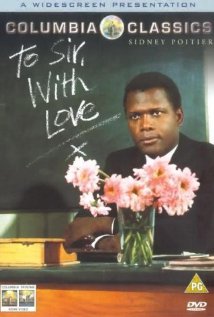
Poitier is not amused.
The example I'm going to use is a movie starring Sidney Poitier (who is a cinematic god and should be treated as such). Poitier comes in to teach a bunch of hooligan kids and the first thing he says to them is, 'I'm going to call you by your proper titles, and I expect you to address me in a similar fashion. You are all young gentlemen and ladies now. I will treat you that way and you will act that way, towards me and each other.' And with that declaration the curriculum is literally thrown out the window (in the form of textbooks) and the children-now-adults are taught what they want to learn. Sidney Poitier is a badass like that, and you will be amused to know that he starred in a similar film called Blackboard Jungle as a young hooligan. Both films are amazing, and apparently still have something to teach us, because we don't never learn nothin'.

The question I would like to put to those who might object to this treatment of young persons as adults is, What harm would it really do to show young people the same respect you might show an adult? After all, these are kids who can hit things really well with a car drive. Either they are old enough to earn our respect and trust in driving a large vehicle or we ought to put them back on their bicycles and tell them to fuck off until they can enlist in the army and buy cigarettes or alcohol. By the way, that last thing is silly, a kid can kill himself slowly through consumerism or sign up to kill himself quickly through war, but he can't get ferschnockered before he goes. Nice job, USA.

And if we're going to take the car away we can go ahead and take away his crappy part time job which might very well be the only responsibility he has nowadays. Yeah, if he's not an adult there's no way he should be working around things like hot grease or cleaning chemicals. Those things are dangerous for children! And respect, god dammit, what use is there in respecting some snot-nosed kid behind a Burger King counter? It's not like that little shit will go off to college and end up being more successful than me someday. Might as well treat all those teenagers like dirt under my fingernails rather than as the young adults they are.

Now, to all the 16 year olds who are probably not reading this, please act like young adults. Please earn the right to be treated as young gentlemen and ladies. I think you will find life much more enjoyable and fulfilling in the long run if you do.

My review can be found on Goodreads. Also, there's an excellent interview from the Colbert Report.
LibsNote: Free copy received from the Firstreads Program on Goodreads.
Related Posts Plugin for WordPress, Blogger...