30 September 2011

Banned Book Week: Harry Potter series


Harry Potter (and the Entire Freaking Series*) by J.K. Rowling.**

I'm not going to talk about magic so much in this post. I feel like I covered that last year with my Strega Nona post. Instead I think I'll talk about faith versus belief and how beliefs can and should be challenged in order to build a stronger faith and why I think the witchcraft hubbub is actually weakening Christianity.

I was raised in a Judeo-Christian faith which promotes reflection on both my own traditions and the traditions of other religions. As a result, my beliefs have constantly been challenged, and even changed, usually for the better. Although I have gone through cycles of agnosticism, those cycles have actually brought me closer to God in the long run, and they allowed me to be more honest with myself and my God, who I am sure appreciates that I love "him"*** because I want to and not because I have been told to.

If you notice, most of the revered characters of the Bible have had tests of faith. Jesus himself was tested. And yet, many Christian leaders seem to think that the moral fiber of their flock is not strong enough to withstand the fictional world of Harry Potter; that somehow reading about witchcraft will turn all the good Christians into devil worshiping orgiastic nymphos. My response is, if you're that worried about testing your beliefs, then you must believe that your faith is not strong enough to survive other ideas which... doesn't seem like much faith to me. And if you are a religious leader and believe your parish/congregation/et al isn't strong enough to withstand those tests, then you have not done your job to prepare them.

After all, one of the definitions of faith is, "strong or unshakeable belief in something, esp without proof or evidence." While some of your beliefs might be tested by reading the Harry Potter series or exposing yourself to Wicca and/or its practitioners or even just reading about fictional wizards and magic, your faith ought to remain intact if you have prepared yourself and truly believe in God. If you avoid the testing of your faith, you are avoiding a rite of passage as important as Baptism or Communion or whatever other ritual your sect goes through. Testing your faith will bring you closer to God, not further away, and you ought to be pissed that people are keeping you from that rite in the same way that you ought to be pissed that the church ever prevented the people from reading the Bible for themselves. 

LibsNote: Banned Graphic provided in part by Barefoot Liam Stock, with permission.
*Image ganked from Blueberry Brands.
**No ISBN, since I cannot for the life of me remember all of the ISBNs for each and every single HP novel I read.
***I believe God is both genderless and genderful, encompassing everything that is and was, but male pronouns are traditional and so they're just easier.
 
Because Harry Potter and his friends are THE DEVIL.

29 September 2011

Post 431: Grave Matters

Grave Matters: Excavating California's Past. ISBN: 9781597141628 (advanced copy - publishes October 10, 2011).

I am such a white person. I really, really am. The older I get, the more white I realize I am, and by that I mean I am fairly privileged in the sense that no one judges me as being "less than" or an "exception" based on my skin color. Other visual criteria, sure, but nothing so basic and less physically important as my skin color.

This condition of whiteness became more important when I decided to become a history major. Not only because my senior project focused on the topic of whiteness,* but because the field as a whole has some, er, issues regarding who has written history in the past and how they have written it. Anthropology has of course gone through and perpetrated some of the same issues aaaannnndddd they have the added onus of desecrating graves and/or profiting professionally from the desecration of graves. I will admit, before attending to Antioch College, I never could quite understand why Native Americans didn't want to share their history and culture by allowing anthropologists to study and publish about their culture, but the more I was exposed to the concept of white privilege and what that actually meant, the more I was taught, came to learn, and accepted that my previously held belief was from a position of power. Whereas I and my ancestors have and had the authority to allow people to exhume bodies** for research purposes, etc., Native Americans have not traditionally had this privilege, and even today there are people who look for burial items as a hobby.

Some of this stems from objectification of items sacred to another culture. By disturbing these items, we (white people) also remove their inherent sacredness. We treat them as mere artifacts, rather than the precious and wonderful things they are. The fact that we also do this to Native American remains, having actually displayed them in publicly funded museums until about the 1990s, does not say much for white people as a race, especially one that seems to think of itself as "superior."

Of course, part of the problem is that many of us consider Native Americans extinct as a people. We're all aware that there are Native Americans on reservations, but we also have it in our heads that they're all going to die of alcoholism and diabetes in the next 20 years, so why should they care of we dig up their grandmothers and grandfathers? Which ... oh man, I cannot tell you how wrong that justification and those assumptions are. And I learned exactly how wrong that line of thinking is in a very uncomfortable and personal experience.

During my first summer term at Antioch, I decided to take a memoir class. One of the books we were required to read was Banana Rose by Natalie Goldberg, who was gracious enough to visit the campus and speak with our class as a favor to the professor. She was confronted by a couple of my classmates, among them a Native American woman, about the following scene where Banana Rose finds a turquoise bead in an anthill,

"The ancient people had given something to me. I wanted to show Gaugin. Leaping over a dirt mound, both legs spread in the air like scissors, I swallowed it. It wasn't big enough to feel go down, but I knew it. I stopped dead. The last of the American Indians, and I had been stupid enough to swallow it. I took a deep breath and walked steadily back to camp, half angry, half foolish, and another half wild--I had ancient turquoise inside me." ***

The problem wasn't that the bead was found, although there might have been some discussion as to whether the bead belonged to Banana Rose as she seems to think it did, but with the phrase, "The last of the American Indians". At the time, I was upset with this incident. I thought it was rude to so angrily and harshly confront someone who traveled all the way from New Mexico to speak with us, but in retrospect, those students were speaking for a group of people who didn't have a voice in the past, and who no longer have the luxury of being nice and polite if they want their needs met and their rights respected.

The last reason for my change of heart regarding this type of anthropology and display of cultural artifacts and even history, is that without cultural context we can never really get a full picture of what people were like. What good does it do to dig up these items if the people they belonged to feel so violated that they have no desire to share any of their cultural heritage with us? By taking these items, we prove ourselves unworthy of learning anything about them and we also make assumptions based on previous, and patronizingly wrong-headed, research and opinion. That research may still be valuable, but the context of the sensibilities of the time also need to be taken into account and ought to be reevaluated, preferably with the help of those more knowledgeable about the culture... like those native to it.

My review can be found on Goodreads.
LibsNote: Review copy provided by Netgalley.
*For those interested, the project was called Die Volksamerikaner: Perceptions of German Immigrants to America during the Civil War, WWI, and WWII. I can recommend reading material on request.
**Or at least the recognition that this was a punishable offense and scandalously wrong.
***Quote found via Google Books.

28 September 2011

Banned Book Week: It's Perfectly Normal

It's Perfectly Normal: Changing Bodies, Growing Up, Sex and Sexual Health by Robie H. Harris.*

Note: I cannot be completely sure that this is the book I read on puberty, but I did look looking at the Google preview (note, contains drawn nudity) of a more recent edition. It was first published at about 1994, when I read my first puberty book, and I will be talking about my feelings/thoughts regarding what I know of this book and how I felt about the book I actually read... which may or may not be the same.

The title is welcoming and non-judgmental and tells you exactly what's going to be covered in the book, and it appears to be a book for everyone because there are a multitude of different children on the cover from different backgrounds and of different stages in development. So while this may not be THE puberty book I read, it is probably close enough for this discussion and I would certainly not hesitate to give any educational book to my child regarding sex or puberty. Yes, I've read the reviews that there are naked cartoon people everywhere in this book; I'm actually not concerned with that. I think children understanding that there is a variety to naked bodies is both important and healthy and really, what's so terrible about breasts, vulvae, penises, and testicles anyway? (I'll wait for the less mature to stop giggling.)

...

So I learned about puberty through a book. My mother probably sat me down at some point and told me in general terms what puberty was. I certainly had a general idea of what puberty was when I asked her to buy a puberty book for me from the Hastings in Altus, Oklahoma, but even at the young and tender age of somewhere between 8-10, I knew I wanted details and that reading would give me: A) better and more thorough information, B) include information my mother might not want to tell me herself, and C) allow me to read, reread, and digest the information at a good-for-me pace, rather than listening to someone ramble on and missing things. Not only did it let my mom off the hook for explaining some of the more awkward things that were happening to me (yes, I was an early bloomer at about 5'0" by 2nd grade), but it made it easier for me to ask her questions and to know what questions to ask.

It astonishes me that people are so afraid of these books. Even if you want to teach your children that homosexuality is wrong, having them know that it exists and other people experience homosexual feelings is not going to hurt your child. You can still teach your child that homosexuality is wrong, as backwards and mean as I think that is, but it will not prevent your child from having those feelings if he or she is so inclined. It is better for your child not to be surprised about puberty, not to be surprised by sudden sexual feelings, not to be surprised that puberty has come early or hasn't come at all yet, not to be surprised that they look different naked than their friends, etc.

And while I do recognize that there is a lot of nudity in this book, seemingly more than is "necessary," I am also okay with it. I actually found it useful as a child. I was not looking at these naked drawings for any sexual reason, but because I was naturally curious about what my body might look like. Having a variety of drawings helped, because I knew I wouldn't look exactly like any of them. So while it may seem gratuitous, it actually serves a very noble purpose, especially when we are bombarded daily with very specific kinds of bodies via marketing companies, etc. We have long lives ahead of us to deal with body issues; starting life with them isn't going to help, and not including the drawings will only put the especially curious child in the position of seeking out other ways of looking at naked developing bodies.

LibsNote: *No ISBN as I am not sure which version I originally read, if it was indeed this particular book. Looking at the preview, it is an excellent resource and I would definitely recommend it.
**Banned Graphic provided in part by Barefoot Liam Stock, with permission.

Because people want to teach their children that menstruation is a sign of the devil rather than a normal thing. 
Also, there is Teh Gay in this book.

27 September 2011

Post 430: a general update

Awwww yeah, halfway through Banned Book Week. I am such a pro. Just in case you didn't figure it out, the posts that say "Post" are my regular...posts, and the ones that say Banned Book Week make lovers of freedom everywhere cry. Except that Banned Book Week is awesome. There are of course a naysayers, that Banned Book Week is all propaganda and 'no one in America actually bans books.' The logic behind the argument is that books are widely available for purchase everywhere, and therefore limiting access in one location (such as a school library) does not preclude the ability to procure the book elsewhere. To those people I say, you do realize that Borders closed ALL of their stores recently, right? And that we're in an economic crisis and not everyone can afford to buy ALL of the books they want to read? Because, I mean... that happened and is happening. There are some communities that no longer HAVE a bookstore because Borders ran out all of the small booksellers, and now there is a gaping bookseller shaped hole. Information deserts, ya'll. Anyway, I can't afford to keep feeding you all this thought-food, because I am broke as shit. So I will talk about the books I will talk about. Except of course the Banned Books, because those are SURPRISES.

Grave Matters by Tony Platt.
Finished this on Saturday. Possibly the best book I have ever read that was written by a white guy and explains the issue of Native American burial rights and wanting artifacts and bones returned. It's focused on one Native American group, the Yoruk, in California, but he uses their condition as a way of talking specifically about an issue that affects a large number of people in a similar manner. As someone with a background in history (and a white person), I am complicit in benefiting, however indirectly, from the suffering of Native Americans. That shit is not cool, and I'll be talking more about my feelings regarding the use of research gained through illicit means, i.e. grave robbing.

The Best American Science and Nature Writing of 2011 edited by Mary Roach.
Mary Roach is a science superstar. I want to follow her around on her next research project, if only so I can get more poop stories. I am afraid of reading the news, so I feel like I missed out on a lot of interesting scientific research/developments/whatevers, and this seems like a good way to at least broaden my horizons a bit. The fact that it is edited by someone I trust just makes it awesome. Also, how the hell am I going to shorten that title for my label? Holy butts.

Ready Player One by Ernest Cline.
I have no preconceived expectations about this one except that pretty much everyone on my blogging list is all THIS IS GOOD! So, I saw it at the library, and I was all, meh, okay. It will be a nice break from my proscribed reading, because holy crap after this I am pretty much booked until November. Get it, booked? I am a book blogger... Yeah okay, at least I didn't eat paste as a kid.

How to Live Safely in a Science Fiction Universe by Charles YU...
no have a shorter title? Actually, I really like this title, and somehow it makes me really, really want to know how to survive (and safely!) in a science fiction universe. These are things that are relevant to my life. This is why I also own a copy of The Zombie Survival Guide; well, that and I found most of the information also works for stupid people.

26 September 2011

Post 429: Shame the Devil

Shame the Devil by Debra Brenegan. ISBN: 9781438435879.

So I ended up reading yet another novelization of a woman's life shortly after The Maid. This one was significantly better; although it still contained some fawning, there was a decent balance and other, less favorable viewpoints were occasionally added to give a more rounded picture.

One of the main themes in this book was the ability for a woman's reputation to be so easily ruined through rumor, especially considering that the reputation of men is fairly safe from scrutiny. This is one of the things that hasn't changed in the past 200 years, despite all of the advances women have made. This is probably the one area that has not changed at all, and likely one of the things holding us back the most, because our reputations as women still matter for some reason.

The fact that women are still judged by their sexual history, or even presumed sexual history, means that every single woman is a victim of rumor-mongering at some point in her life. Not only that, but we are more open to being attacked than men, because it is expected. How often do you hear news stories of teenage boys having their naked photos texted around school? I haven't heard of one, and probably not because teenage boys are too shy about their bodies. For one thing boys do not have as much pressure placed on them to take those photos in the first place; if they do take the photos and send them on, it would seem that their girlfriends have a better understanding that those photos are private and sharing them would be a breach of trust. I do not think this is because girls and women are "more moral" than men, but because men are still under the impression, however subconscious, that if they are given access to a woman's body in ANY way, they continue to have access to it until it comes under the purview of some other man.

You can see this line of thinking in what the internet thinks is funny through various websites, more commonly on the Icanhascheezburger split offs (they frequently show up in Demotivational Posters*).  Currently there is a trend of posting pictures of unconscious women with the caption, "Dear Diary: Jackpot." That these pictures are so prolific is evidence that a number of "men" are dickless scumbags and have no concept of respect. Those same "men" will probably also call me a humorless bitch, but I sincerely doubt they would think it was funny if there were pictures of them on the internet with their pants around their ankles and a much more muscular man positioned behind them to look like they were being raped. It wouldn't matter whether or not it happened, those images would be available and people would look at the person photographed differently.

That all men, or even other women, have to do is imply that a woman is promiscuous to open her up to attacks is something we all need to work on. How often have you heard that Jenny slept her way to the top and automatically believed it? Or that Tom divorced Mary for having an affair? Or Jane appeared in Playboy? How have you judged these fictional women? Are they women you would want to associate with? What about if I told you that Jenny was pressured by her boss and worked in a corporate culture that ignores sexual harassment? Or that Jenny was finally going to be promoted over a man, and Bob who is an entitled slack ass make an "off-hand comment" that quickly turned into a rumor? What if Mary only had an affair because after 15 years of a loveless marriage, she fell in love with her best friend Grace and didn't know how to come out? Or that Tom had been having affairs for years, and Mary, left at home for so long, finally found comfort and companionship elsewhere? And so what if Jane appeared in Playboy? Maybe it was the only way she could pay for college, or her grandmother's medical bills.

The point is that women are so much more readily judged for their sexual habits then men, and people are more willing to believe that they are guilty of "offenses" against "normative" sexual behavior, whereas we are still somewhat inclined to give men the benefit of a doubt. We are more likely to check facts with the source, even though that source might be a big Liar McLiar pants. That women still live well or die poorly by their reputations (via job, friend, and partner options) is something we ought to be far more ashamed of than any woman actually "guilty" of having sex with an entire football team.

My review can be found at Goodreads.
LibsNote: Copy provided via publicist.
*It's definitely demotivating, but at this point the whole concept behind Demotivational Posters has been completely bastardized. Dear internet, you are doing it wrong.

25 September 2011

Banned Book Week: Twilight

Twilight by Stephenie Meyer.

This is probably the only time you will really see this title on my blog. It just doesn't need more publicity, and even though I plan to slog through the last three books at some point, it's not necessary to give them any more attention than they've already received. I don't feel like they are particularly good books in content, underlying message, or writing style, though Meyer does create a somewhat compelling plot in between Bella's whining and pining.

Despite all of that, I would not want to see these books banned. I might not have wanted to see such a prestigious publishing house as Hachette subsidiary Little, Brown, and Company to have produced these seemingly slack-edited volumes, but I don't hate it enough to burn every single copy in existence. In fact, I wouldn't do that to any book, because there are always more reasons to preserve a book than to let it perish forever. I don't even think these books should be removed from most schools; granted, primary school (ages 6-13) might be a bit young, though 12 isn't too terrible to start these with parental discussion available. I do have a problem with the inability of children to bring and trade their own copies to school, as mentioned in the previous link. This is definitely an encroachment on free speech/freedom of information and parental governance.

The link also mentions a concern with children being unable to determine whether the works are fictitious and developing a "wrong grasp on reality." It seems to me that either the children in Australia have been living with too many poisonous animals and therefore have a warped sense of what monsters are real OR the adults in Australia think their children suffer from psychosis until they reach maturity. Even when I was five years old, I had a pretty good idea of what was real and what wasn't, and if I didn't I asked someone. Of course, Australia isn't alone in boneheaded moves, plenty of places in America have banned or challenged these works and while I personally don't care for what these books stand for, I do not have a problem with them being a form of entertainment.

No, the main reason I would want Twilight to be banned is that it has bred a slew of similar works simply because it has made money. I do not mind that Twilight has made money, or that other people would like to make money in a similar manner, but publishing houses are so focused on finding the next Twilight that I am sure they are ignoring other much more important YA books in favor of YA Paranormal Romance/Love triangle/whiny and personality-less heroine type books.

Sigh. But.

I have no say in what publishing companies decide to produce and so I can only go all ragey on the really bad stuff and/or express my disappointment. And so somewhere another publisher is putting another one of these travesties on the market instead of a really amazing YA book about growing up as a gay Mormon** -- a book sure to be banned across the country.

LibsNote: Book first read sometime in 2008 or so, hence the lack of ISBN for this post.
*Banned Graphic provided in part by Barefoot Liam Stock, with permission.
**To my knowledge, this book does not exist on the market. WHERE IS THIS BOOK?


Because I don't like it, dammit!
 And also dirty, dirty married vampire sexin's.

24 September 2011

Banned Book Week: The Hunger Games

The Hunger Games by Suzanne Collins. ISBN: 9780439023481.

So about a year ago, this book was challenged by a parent in New Hampshire (link under the Banned image). The complaint being that her daughter, in 7th grade at the time, was having nightmares and the children were being exploited, having to fight each other to the death and all for "entertainment" purposes. First of all, congratulations on having a child who isn't desensitized and therefore had a proper response to this novel via nightmares.  Second, while the Hunger Games may have devolved into a form of entertainment for people in the Capital, and a couple of other Sectors, for the most part it was a very political method of keeping an oppressed population in line.

And while I agree that the slaughter, or even exploitation of, children for entertainment is despicable, sweeping it under the rug will not prevent it from happening or negate its existence. All that will do is create an atmosphere, or at least a bubble, of ignorance of the issue. Which, even though I disagree with this approach, is the right of a parent. Parents do have the right to allow their child(ren) to live in ignorance of certain issues up until that child reaches the age of 18... although most children over 13 have figured out how to get into whatever the hell they want to get into anyway and so by that age your only option is to keep them locked in the basement. I think that by 7th grade, children should be aware that bad things happen to young people and could potentially happen to them. I recognize that those are not comforting thoughts for a child, and really uncomfortable thoughts for a parent, but unfortunately we don't live in a world that is safe for everyone. So, even if you live in the suburbs of New Hampshire and your daughter hasn't been exposed to child on child murder/brutality or exploitation of children by adults, it might be best that she is aware that it does in fact happen in the world.

There are several reasons for this: it will allow her to form an opinion about it; it will allow you, the parent, to inform the opinion that she forms about it; addressing the fears causing the nightmare will be much more effective than ignoring or preventing those fears; and perhaps she will become impassioned by the idea of ensuring that the children of the world, our world, aren't subjected to the same fate as fictional children in a land faraway and once upon a time.

Let's be realistic. Raising our children with limited exposure to violence is still a privilege. If it is something that concerns you, as a parent, so much that you don't want your children reading about it -- in a safe and secure situation, nonetheless -- perhaps you can do more to tackle the real life problem rather than addressing its fictional counterpart. Because really, the real violence and exploitation should be far more distressing to you as a moral being than the fact that someone wrote about characters in a book killing each other. Working on it with your child may even help with their nightmares... Just a thought.

LibsNote: Previous read, blog posts can be found here.
*Banned Graphic provided in part by Barefoot Liam Stock, with permission.


because children died for "entertainment" purposes.


22 September 2011

Post 428: The Maid

The Maid by Kimberly Cutter. ISBN: 9780547427522 (eGalley - publishes: October 20, 2011).

Although I didn't find this a particularly strong Joan of Arc novel, I do appreciate how difficult it must be to write a fictionalized account of someone you really respect, admire, or even worship. On the one hand, there is the desire to present an accurate account of events with factual information, etc., but sometimes in order to create a really compelling story those events have to be ignored. Sometimes you even have to present your hero in a less than favorable light in order to make him or her a well rounded character (or, you know, human).

I think Cutter really tried to do this with The Maid, but just didn't quite get there. There were a few too many eggshells she tried to step around instead of just stomping all over them to get where she wanted to go. I'm not sure I could have written anything better, mind you. If I had been given the task of writing a fictional account of the life of Martin Luther King, Jr. or some other generally well respected individual, I don't think I could do bring myself to do it. I would be more concerned with telling a compelling story than upholding the pure and glorious image of that individual. I would want to introduce the moments when they were fallible and human and being stupid or immoral or were otherwise not being Great People.

This is where people are more interesting, really. Maybe that's showing my appreciation for drama and other train wrecks, but it's also much easier to relate to someone who cheated on a history exam than someone whom the history books are written about. Basically, I probably would have crushed one too many eggshells and really pissed someone off either because they don't understand the idea of fictionalized accounts, or because I included factual information they didn't like. That shit happens too.

Who would you have the most trouble writing about?

My review can be found on Goodreads.
LibsNote: Review copy provided by NetGalley.

19 September 2011

Post 427: Steampunk!

Steampunk! An Anthology of Fantastically Rich and Strange Stories edited by Kelly Link and Gavin J. Grant. ISBN: 9780763648435 (eGalley - publishes: October 11, 2011).

One of the things I like most about steampunk, besides the inventive gadgets of course, is that no matter how disparate the social structure or power dynamic, the machines almost always seem to play a part in helping equalize it. All you have to do is be able to figure out the machines, or at least be clever enough to use them in a different way and find someone to help you do that.

Because of this, we seem to get pluckier characters, usually children, and often female children or young adults who get fed up with The Way Things Are and go about working around, with, or against the system to get what they want, and damn the consequences. Nearly all of the stories in this collection are about children, or at least start off that way, and the majority of the steampunk works I've read (Leviathan series, to some extent the Parasol Protectorate, many of the Pump Six stories, etc) have involved young characters in otherwise powerless positions. This was not the stated goal in this particular anthology, so I am especially interested in the fact that pretty much all of the stories contained this element.

For instance, the fabulous Cory Doctorow gives us The Clockwork Fagin, a sort of Oliver Twist with a twist; indeed, this is where the title comes from. Our narrator ends up in a workhouse for girls and boys who have lost limbs to machinery, not uncommon during the industrial era, but these are computing machines rather than industrial looms and presses. And instead of "Oliver" going to the "Artful Dodger" it's the other way around. In the end the kids find a way of gaining a great deal of freedom, and even a better life, than they would have otherwise. This is in part due to the knowledge they gained from the previously mentioned powerless positions as child laborers. Of course, these children still had to wait for a leader among them to assist in their liberation, but that they are able to rise above their circumstances is all due to the mechanisms in hand.

Other interesting stories include The Last Ride of the Glory Girls (Libby Bray), Steam Girl (Dylan Horrocks), and The Ghost of Cwmlech Manor (Delta Sherman). The first two involve outcasts finding their places, the first through her use of mechanical know-how and the second as two teenagers relate to each other through their imaginative stories. The last story is probably the least profound in the sense that Tacy does not avoid servitude, but still manages to eke out a better living and a better servant position.

Despite the similarities in steampunk, there is still a lot about it that is unique to the genre. People are more playful with it, and it is a vastly more hopeful realm of science fiction than some of its predecessors (i.e. Frankenstein stories). It revels in the technology and offers it up as a token of hope rather than the ever present dire and doom of more traditional science fiction. To be certain, there are still some authors who go dark and gloomy with this genre (hi there, Bacigalupi), which isn't a bad thing; rather it provides a more vivid contrast to every silver lining presented.

My review can be found on Goodreads.
LibsNote: Review copy provided by NetGalley

15 September 2011

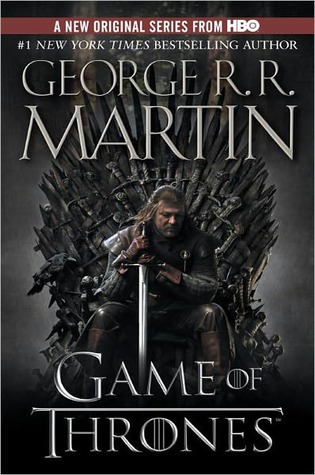
Post 426: A Game of Thrones

A Game of Thrones by George R.R. Martin. ISBN: 9780553897845 (eBook).

Spoiler...ish? Alert: I will be talking in vague terms about what happens to various characters, in the sense of, "unnamed bad things happened to Specific Character." Some people have weird ideas about what constitutes a spoiler, so just in case here's your damned alert.

The characters in this book are awesome and rat bastards and/or whiners. Which I have to admit is something that most novels, especially fantasy novels, seem to lack. The entire book is composed of grey area characterizations. There are characters we are pretty obviously supposed to like even though they are annoying, and characters we probably shouldn't like but do anyway, or at least we can understand their motivations and their behavior.

For instance, I like Jon Snow and Arya Stark. They are just about the same character, really. Not in a bad way; they are more like companion characters rather than exact duplicates, they share many of the same issues and by reading about one character we can easily learn more about the psyche of the other. Maybe this sounds like sloppy writing, but in a supposedly 7-book series in which each book is 800 pages (or more), having characters who have similar backgrounds and personalities, who are also related to each other is as much a blessing to the audience as it is to the author. And though they start the story from similar places (black sheep in an otherwise uptight vanilla family), they end up in completely different places. The same is true for their opposite siblings (Robb and Sansa), who are also paired in the sense that they are "perfect" children who adhere to their assigned roles. Sansa is ever the lady that Arya cannot possibly be, and Robb is lord of the manor and the legitimate son that Jon can't be, no matter how good of a son he is, since he is a bastard. Meanwhile Sansa ends up in a less than desirable state due to her obedience to social norms, mostly because she was not mindful about her obedience.

On the other hand we have Catelyn Stark and Eddard Stark, the parents of the Stark children, who also echo Sansa and Robb, but in the opposite manner. Eddard ends up in a not so great situation, whereas Catleyn fairs relatively well. Catelyn is your typical dutiful mother and wife, but she also understands what she has given up to be that. Meanwhile Eddard turns a blind eye to what his king and friend has become and makes poor decisions about who he trusts because he trusts who he feels he's supposed to trust based on duty.

Meanwhile we have the "villians" who, while villainous, also have some fairly understandable motives. Let's look at the biggest asshole of the bunch, Viserys. There are pretty much no redeeming qualities to Viserys: he is whiny, a bully, and has entitlement issues, but who among us wouldn't have a deep seething rage if our home, family, and promised future was taken from us? The fact that Viserys takes it out on his sister and has a laughable catchphrase only makes him a douchebag, which in some ways makes him even more pitiable. Because in the end we feel he deserves his fate, and that in itself is somewhat sad.

Even conniving bitch Queen Ceresi has understandable reasons for being a conniving bitch. Let's face it, how many of us would be happy in a marriage to someone who has a great deal of influence, has become fat, drunk, and frittered away most of his responsibilities, whores around, and still carries a torch for a woman who's been dead for 20 years? If I were stuck in that marriage, I might try to weasel my way into a better position and then off my husband too. Granted... my way wouldn't involve some of the dirty, dirty things Ceresi did, but Martin seems to have a thing for the whole brother/sister pairing. Which is fine, because there is totally precedent with the Ptolemys, but I have been raised with the social taboo and a brother I greatly dislike.

I could go on with the character analysis, but let's be honest, if you aren't interested in reading the book by now, you aren't going to continue to read this blog post. And if you are interested in reading the book, chances are you have already left this page so you can find a copy.

One of my favorite bloggers, Trish over at eclectic/eccentric has been tracking her thoughts through the book, she's only half way through, but here are her updates: one, two, three. A fairly good review is over at the wonderfully named Stainless Steel Droppings.
LibsNote: Library copy via Overdrive Media.
Related Posts Plugin for WordPress, Blogger...